
海绵宝宝
别样小寒 乐暖冬日—华新幼教集团开展小寒节气活动纪实_我的网站

A |
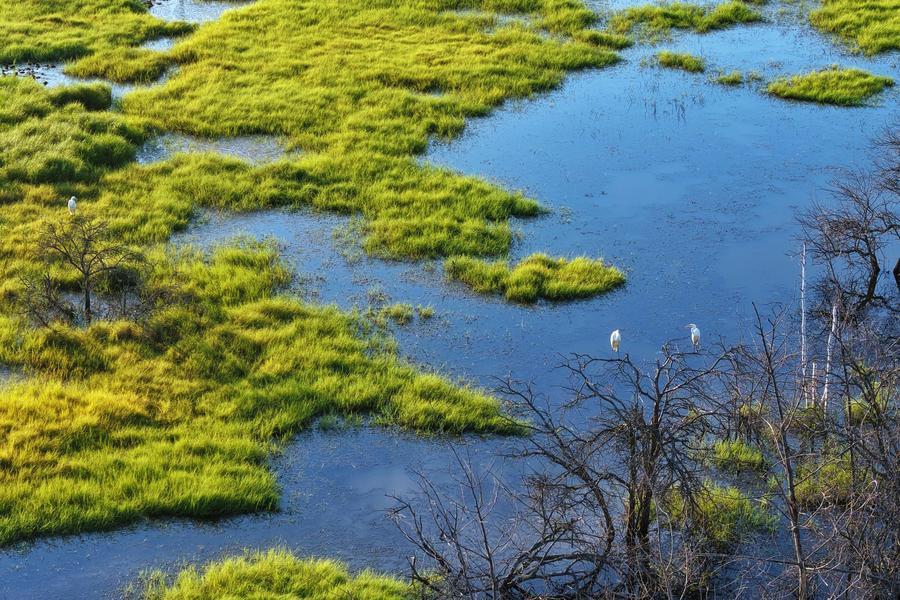
China took a major step toward green modernization on Saturday as its landmark Ecological and Environmental Code officially came into force, strengthening the legal foundation for a more harmonious coexistence between humanity and nature.
Adopted by China's top legislature in March, the code is China's second formal statutory code after the Civil Code.
The code comprises 1,242 articles in five chapters, covering pollution control, ecological protection, and green and low-carbon development, among other areas.
As China advances its Beautiful China initiative, the code is expected to strengthen rule-of-law guarantees for ecological protection and provide fresh impetus for the country's green and low-carbon transition.
A STRONGER SHIELD FOR NATURE
Now in effect, the Ecological and Environmental Code brings together more than 30 laws, 100 administrative regulations, and 1,000 local laws and regulations through systematic integration, compilation, revision, and refinement, creating stronger legal synergy for ecological protection.
"This is a historic shift in the logic of China's ecological and environmental governance," said Qin Tianbao, a professor at Wuhan University. With the new code, China's ecological protection is moving from fragmented management toward systematic governance, Qin said.
The new code has also been welcomed by local judicial authorities across the country, who say it will have a major impact on their work.
"As the code comes into force, we have clearer guidance and a more focused approach when handling cases related to ecological, environmental and resource protection," said Xu Xufen, a judge at the Intermediate People's Court of Huzhou City in east China's Zhejiang Province.
This is because the code establishes a systematic, comprehensive and clearly structured set of legal values, which provide fundamental guidance for adjudication, Xu said.
China's ecological protection legislation has made continued progress in recent years, forming a wide-ranging, detailed and practical legal framework. However, analysts note that some obstacles remain, including fragmentation among different laws and regulations.
The code can help resolve legal conflicts and fill gaps, making the country's ecological and environmental legal system more integrated and coordinated, and better able to keep pace with the times, said Yu Wenxuan, a professor at the China University of Political Science and Law.
The strengthened legal framework comes alongside years of efforts that have produced key environmental gains. Some innovative explorations include the river, lake and forest chief systems, as well as central environmental protection inspections, which have all been included into the code.
Such efforts have led to major changes in China's ecological protection, with key indicators continuing to improve. In 2025, the average PM2.5 concentration in major Chinese cities fell to 28 micrograms per cubic meter, while the proportion of days with good air quality reached 89.3 percent, both the best levels since monitoring began. China has become one of the countries with the fastest improvement in air quality in the world.
By the end of 2025, China's national forest coverage rate had exceeded 25 percent. Since the beginning of this century, about one quarter of the world's newly afforested areas have come from China. The country has recorded the world's largest and fastest growth in forest resources.
Looking ahead, China has mapped out the next stage of its ecological protection drive. In July, the State Council issued a plan for building a Beautiful China during the 15th Five-Year Plan period (2026-2030), setting out the overall requirements, targets, key tasks and major projects for comprehensively advancing the initiative.
According to the plan, by 2030, China will achieve an overall improvement in ecological and environmental quality and make significant progress toward building a Beautiful China, with green production and lifestyles largely established and the carbon peaking target reached on schedule.
CHARTING A GREENER FUTURE
By dedicating a chapter to green and low-carbon development, the code helps bring environmental protection and economic development into closer alignment -- two goals often seen as being in tension, said Hou Jiaru, a professor at the China University of Political Science and Law.
"It combines the philosophy of development through protection and protection through development," Hou said.
In practice, China has made solid progress in advancing green development in recent years. The country has cultivated more than 8,000 national-level green factories, built the world's largest clean power supply system and largest clean steel production system, and established the world's largest carbon emissions trading market.
Echoing the spirit of the new code, China's outline of its 15th Five-Year Plan (2026-2030) prioritizes accelerating the comprehensive green transition of economic and social development, calling for faster progress in shaping green modes of production and day-to-day life.
China has also sought to share its green development experience with the world, contributing Chinese solutions to global ecological protection and sustainable development.
In Egypt, for example, a water-saving terraced farming model introduced from China has been replicated, helping conserve water and support agriculture in the mountainous areas of the Sinai Peninsula. In Saudi Arabia, China's photovoltaic technology is helping the Middle Eastern country harness desert sunshine for solar power, offering a practical path toward clean energy transition.
As the code takes effect, China's green modernization drive is gaining not only a stronger legal foundation at home, but also broader relevance for global sustainable development in an era when fragmented legislation is increasingly inadequate for addressing complex environmental challenges.
To this end, the code includes specific provisions on international cooperation, calling on China to strengthen collaboration on ecological and environmental protection, fulfill its obligations under international treaties it has concluded or joined, and promote cooperation in addressing climate change.
Analysts say that the code marks a significant transition for China in global environmental governance, from participant to leader, while offering a legislative model for the world, especially developing countries.
In particular, the code's integrated approach to pollution prevention, ecological protection and green, low-carbon development -- all key issues on the global agenda, represents an important technical contribution to global legislative practice, said Qin.
"The code sends a clear signal to the international community: China is firmly advancing ecological priority and green development in accordance with the rule of law, and is willing to work with countries around the world to build a clean and beautiful world," he added.
。 别样小寒 乐暖冬日 —华新幼教集团开展小寒节气活动纪实— 冬风吹雨小寒生,白雪成花上枝头。小寒是农历二十四节气中的第23个节气,《冬九九歌》里说的“三九四九冰上走”就是这个阶段,标志着进入一年中最寒冷的日子。为了帮助孩子们了解“小寒”节气,体验传统节气习俗活动,华新幼教集团开展了以“别样小寒,乐暖冬日”为主题的活动。

B | 01 别样小寒—习俗知多少 孩子们通过PPT图片、视频、趣味儿歌等形式,初步了解了小寒的气候特点和习俗。 02 别样小寒—创意手工 1.制作梅花:梅花是我国传统的观赏花木,有着悠久的历史,此时正是腊梅盛开的好时节。孩子们利用黏土、卡纸、颜料等材料,动手制作了美丽的梅花,一幅幅别样的梅花在小朋友的手下变得格外生动,给温暖的教室带来阵阵梅花香气。

C | 2. 制作雪人:冬日里怎么能缺少雪花和雪人呢?我们一起用小手制作小雪人,每一幅作品都讲述着孩子们对冬的理解和感受。

D | 03 别样小寒—冬练三九 小寒时节正好处于“二九”、“三九”期间,俗话说“冬炼三九”,这时虽说天气寒冷,却也是加强身体锻炼,增强体质的好时候。小朋友们在老师带领下一起来到户外,进行体育锻炼,使全身暖和,血脉畅通。 通过这些活动的开展,孩子们不仅了解了小寒节气的传统知识和习俗特色,还提升了孩子们的动手能力和团队协作能力,丰富了生活经验和知识经验,更加深入地了解了中国的传统文化和节气文化。在未来的日子里,我们将开展更多此类的活动,让孩子们在快乐中学习、在体验中成长。 END 撰稿:鲍庆冉 编辑:冯丹彤 初审:冯 云 复审:庞志美 终审:单祥珍。
Current article:http://1wg.feizengbubaipeirangnalouchuo.sbs/news/20260826_171.html
Published on:03:55:45